About Kumbh Mela
The World’s Largest Congregation of Faith & Devotion
Kumbh Mela is an ancient pilgrimage of profound spiritual significance in Hinduism. Rooted in Vedic tradition, it symbolizes humanity’s search for liberation (Moksha) and the immortal nectar of wisdom.
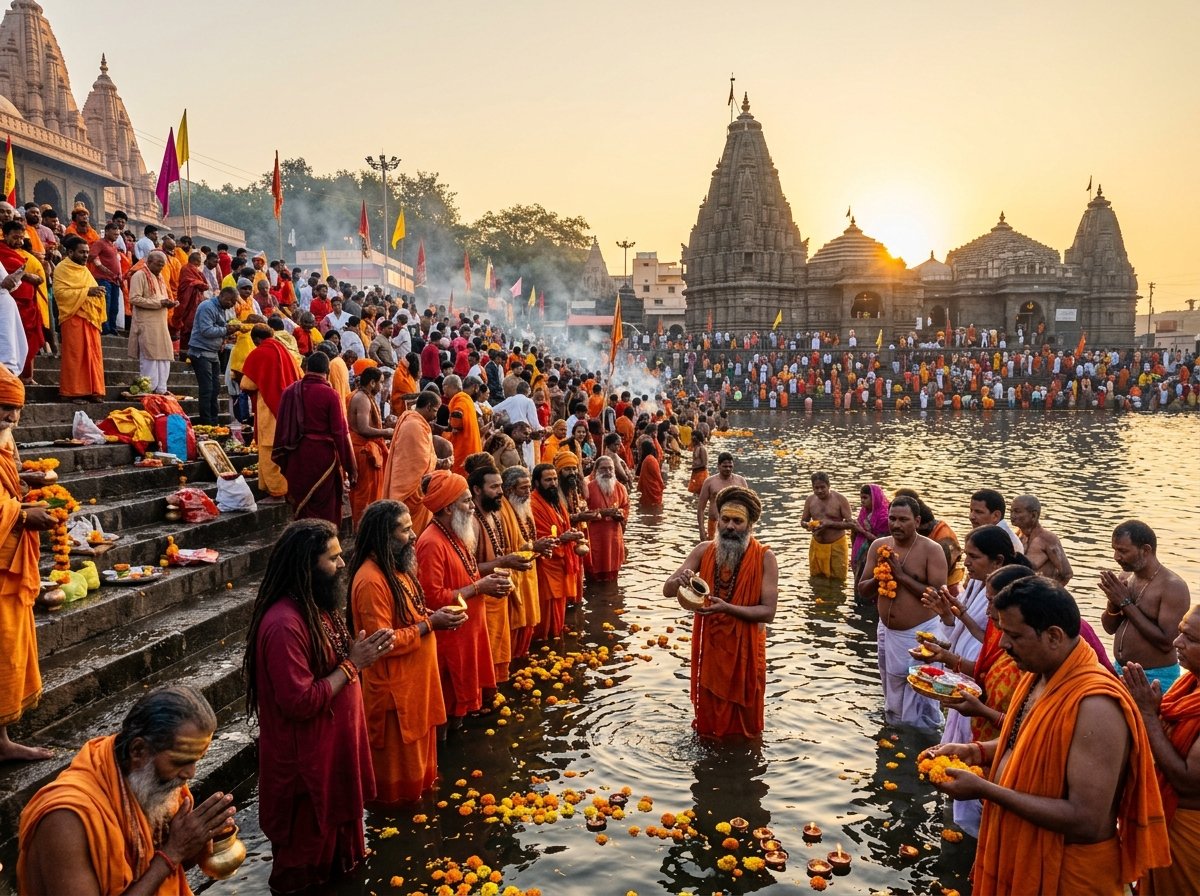
According to sacred scriptures, during the churning of the cosmic ocean (Samudra Manthan), divine nectar (Amrita) spilled from the celestial pot (Kumbha) at four holy spots on Earth: Prayagraj, Haridwar, Ujjain, and Nashik. Taking a holy dip in these sanctified waters during auspicious planetary alignments is believed to cleanse all karma and illuminate the soul.
Where Divine Drops of Amrita Fell
Every three years, the Kumbh Mela rotates among these four sacred riverbanks governed by celestial planetary alignments.
Prayagraj
Triveni Sangam (Ganga, Yamuna, Saraswati)
The king of all holy places (Tirtharaj). The holy bath at Triveni Sangam during Maha Kumbh is considered supreme.
Haridwar
River Ganga (Har Ki Pauri)
Where Mother Ganga enters the Indo-Gangetic plains from the Himalayas. Famous for world-renowned evening Ganga Aarti.
Ujjain
River Shipra (Ram Ghat)
The sacred city of Mahakaleshwar Jyotirlinga. Celebrated as Simhastha Kumbh when Jupiter enters the zodiac Leo (Simha).
Nashik
River Godavari (Trimbakeshwar)
Surrounded by the holy Sahyadri hills, the source of sacred Dakshin Ganga (Godavari) and Trimbakeshwar Jyotirlinga.
The Four Formats of Kumbh Pilgrimage
Maha Kumbh Mela
Held exclusively at Prayagraj once every 144 years (after 12 Purna Kumbh cycles), representing the highest cosmic convergence.
Purna Kumbh Mela
Celebrated every 12 years at Prayagraj, Haridwar, Ujjain, and Nashik with millions gathering for royal bathing.
Ardh Kumbh Mela
Held every 6 years midway between two Purna Kumbh Melas at Prayagraj and Haridwar.
Magh Mela
An annual gathering during the auspicious Hindu month of Magh (January–February) at Prayagraj Sangam.
Intangible Cultural Heritage of Humanity
In 2017, UNESCO inscribed Kumbh Mela on the Representative List of the Intangible Cultural Heritage of Humanity, describing it as the festival of the sacred pitcher and the largest peaceful congregation of pilgrims on Earth.